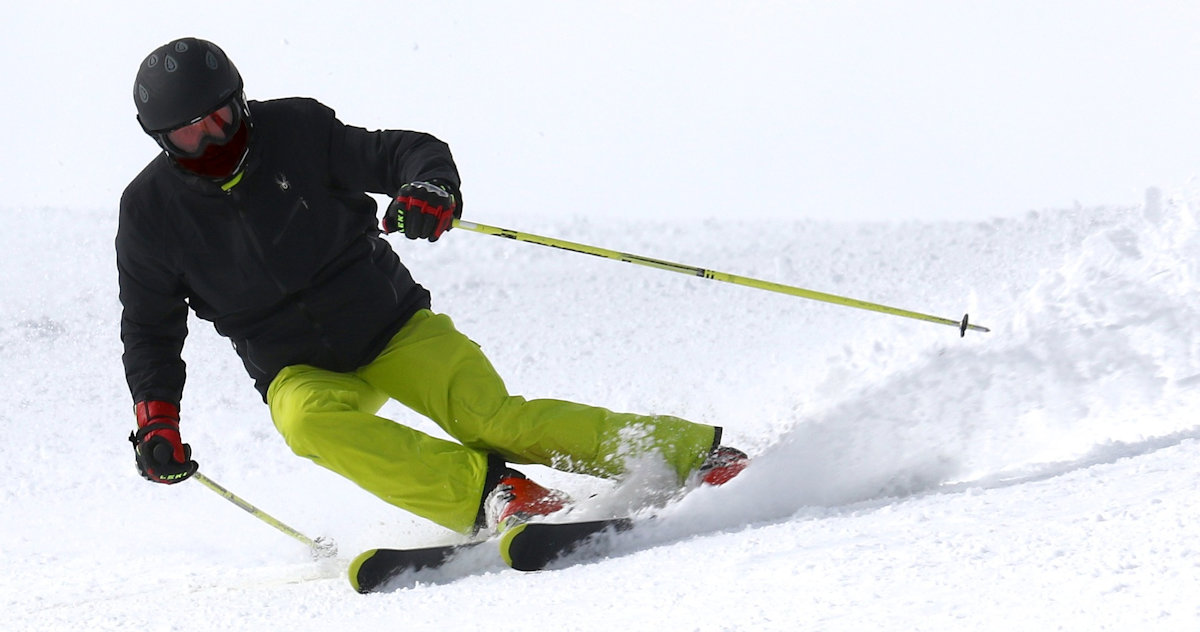
Benefits of Skiing Strength Training
- Squats develop quadriceps, gluteal and other lower-body strength involved in supporting and controlling body position.
- Leg extensions provide targeted quadriceps strengthening when performed with appropriate resistance and technique.
- Calf raises strengthen lower-leg muscles involved in ankle movement and postural control.
- Abdominal exercises help develop trunk strength and stability during coordinated movement.
- Back extensions strengthen muscles involved in supporting the trunk and maintaining posture.
- Lat pulldowns develop upper-body pulling strength and general back conditioning.
- Bench presses and shoulder presses provide additional upper-body strength training.
- Bicep curls and tricep pushdowns strengthen muscles involved in elbow movement and general arm conditioning.
Skiing Training Precautions
- Begin each workout or skiing session with an appropriate warm-up before strenuous activity.
- During squats, maintain controlled movement and keep the knees aligned with the feet.
- During leg extensions, use manageable resistance and avoid forcefully locking the knees.
- During calf raises, maintain balance and avoid excessive ankle movement or uncomfortable positions.
- During abdominal and back exercises, maintain controlled spinal movement and avoid excessive arching or straining.
- During upper-body exercises, maintain appropriate shoulder, elbow and wrist alignment.
- Increase skiing duration, training intensity and difficulty gradually, allowing adequate recovery between demanding sessions.
- Use properly fitted ski equipment and protective gear appropriate for the activity. An appropriately fitted helmet is recommended for downhill skiing.
- Choose terrain appropriate for the skier's experience and ability, and follow posted trail markings and safety instructions.
- Monitor weather, visibility, temperature and snow conditions. Skiing in remote or avalanche-prone terrain requires specialized knowledge, equipment and appropriate preparation.
- Stop or modify activities that produce pain, dizziness or unusual discomfort. Any suspected concussion requires immediate removal from skiing and appropriate medical evaluation before returning.
Developing a Skiing Conditioning Program
A balanced skiing conditioning program may include lower-body strength, trunk stability, balance, mobility, cardiovascular endurance and appropriate recovery.
Downhill skiers may emphasize lower-body strength, controlled movement and balance during changing terrain conditions. Cross-country skiers may place additional emphasis on sustained cardiovascular endurance and coordinated upper-body and lower-body conditioning.
Resistance training may be complemented by appropriately progressed balance exercises, controlled lateral movements and aerobic conditioning. Training should reflect the individual's skiing discipline and experience.
Beginners should emphasize correct exercise technique, manageable resistance and gradual progression before attempting more demanding conditioning activities.
Strength training can support general physical conditioning but does not replace instruction in skiing technique, turning, stopping, terrain assessment or mountain safety procedures.
For additional exercises and conditioning information, visit the Sports-Specific Training Exercises library.
|