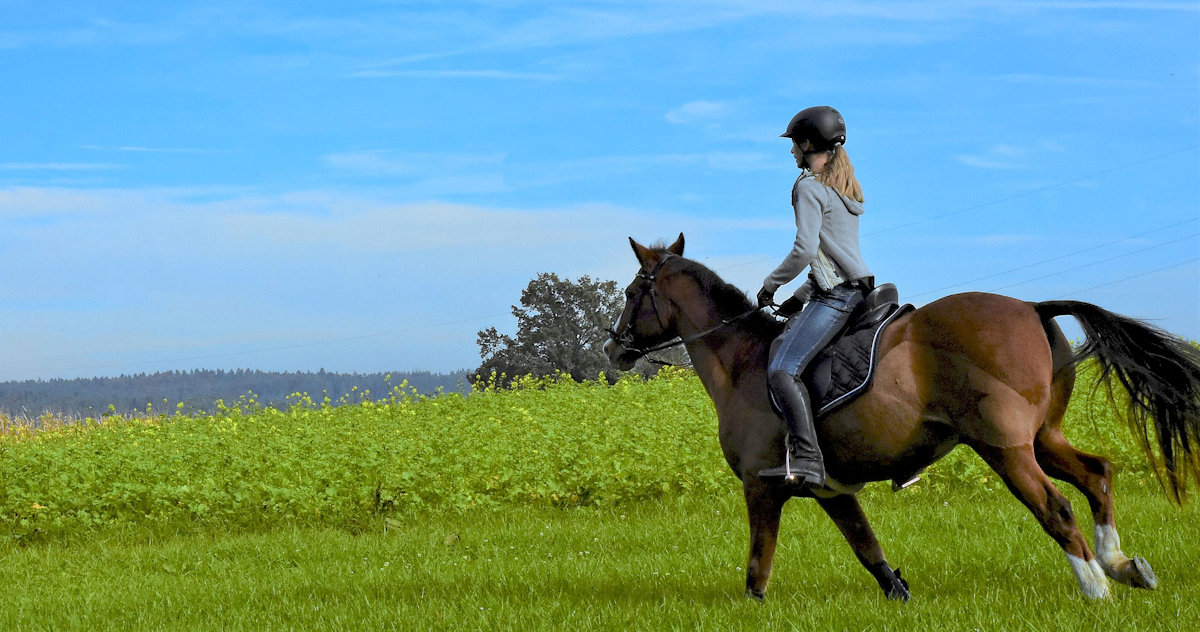
Benefits of Horseback Riding Strength Training
- Hip adductor exercises strengthen muscles of the inner thigh involved in hip movement and pelvic control.
- Hip abductor exercises strengthen muscles of the outer hip that contribute to pelvic stability and lower-body control.
- Leg presses strengthen the quadriceps, gluteal muscles and other lower-body muscles involved in supporting body position.
- Leg extensions provide targeted quadriceps strengthening when performed with appropriate resistance and technique.
- Abdominal exercises help develop trunk strength and stability during controlled movement.
- Back extensions strengthen muscles involved in supporting the trunk and maintaining posture.
- Seated rows and lat pulldowns develop upper-back strength and general pulling capacity.
- Bench presses and shoulder presses provide additional upper-body conditioning.
Horseback Riding Training Precautions
- Begin each workout with an appropriate warm-up before resistance training or strenuous riding activities.
- During hip adductor and abductor exercises, use manageable resistance and avoid forcing the hips beyond a comfortable range of motion.
- During leg presses, maintain controlled movement and avoid excessive knee bending or rounding the lower back.
- During leg extensions, avoid uncontrolled movements or forcefully locking the knees.
- During abdominal and back exercises, maintain controlled spinal movement and avoid excessive arching or uncomfortable positions.
- During shoulder presses, rows and pulldowns, maintain appropriate shoulder, elbow and wrist alignment.
- Avoid excessive gripping or squeezing with the legs while riding. Correct leg position and communication with the horse should be developed through qualified instruction.
- Increase resistance training and riding duration gradually, allowing adequate recovery between demanding sessions.
- Use an appropriately fitted equestrian helmet, suitable footwear and other protective equipment recommended for the riding discipline.
- Riding instruction, horse handling and mounted activities should take place under appropriate supervision, particularly for beginners.
Developing a Horseback Riding Conditioning Program
A balanced horseback riding conditioning program may include hip and lower-body strength, trunk stability, balance, mobility and muscular endurance. Training should reflect the demands of the rider's chosen discipline.
Dressage, jumping, recreational trail riding and other equestrian activities place different demands on posture, coordination and physical endurance. Conditioning programs should be adapted to these individual requirements.
Hip strengthening exercises may be complemented by appropriate balance and mobility activities. Riders should develop the ability to maintain a controlled, relaxed position rather than relying on excessive muscular tension.
Beginners should emphasize correct exercise technique, manageable resistance and gradual progression. Strength training should complement regular riding practice and qualified equestrian instruction.
General conditioning exercises can support physical fitness but do not replace instruction in riding technique, horse handling, balance or equestrian safety procedures.
For additional exercises and conditioning information, visit the Sports-Specific Training Exercises library.
|