|
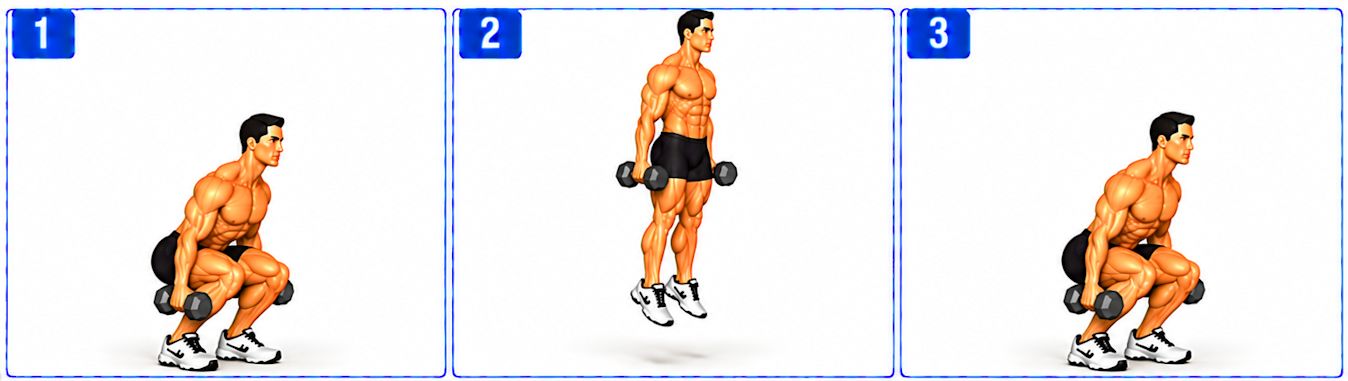
Weighted jump squats are an advanced plyometric exercise that combines explosive lower-body movement with external resistance. The exercise involves holding light dumbbells while lowering into a squat, jumping vertically and landing with control. Weighted jump squats challenge the quadriceps, gluteal muscles, hamstrings and calves while developing lower-body power, coordination and muscular control. Proper technique and appropriate resistance are essential because the additional weight increases the demands placed on the muscles and joints during takeoff and landing.
TARGET MUSCLES:
- Quadriceps: Extend the knees during the explosive upward jump and help control knee flexion during landing.
- Gluteus maximus: Produces powerful hip extension during takeoff and assists with controlled deceleration during landing.
- Hamstrings: Assist hip extension and contribute to stabilization of the hips and knees throughout the movement.
- Calves (gastrocnemius and soleus): Assist with ankle plantar flexion during takeoff and help absorb landing forces.
- Gluteus medius and minimus: Help stabilize the pelvis and maintain proper lower-extremity alignment.
- Abdominal and core muscles: Stabilize the trunk and spine during the squat, jump and landing phases.
- Forearm and hand muscles: Maintain a secure grip on the dumbbells throughout the exercise.
START POSITION:
- Stand upright with the feet approximately shoulder-width apart and the toes pointing forward or slightly outward.
- Hold a light dumbbell in each hand with the arms extended naturally at the sides and the palms facing inward.
- Keep the head up, chest lifted and abdominal muscles engaged while maintaining a neutral spine.
- Distribute the weight evenly across both feet and keep the knees aligned with the direction of the toes.
- Prepare to lower into a squat while keeping the dumbbells close to the sides of the body.
PROCEDURE:
- Bend the hips and knees to lower into a comfortable squat position, maintaining a neutral spine and stable torso.
- Push forcefully through both feet, extending the hips, knees and ankles to jump vertically off the floor.
- Keep the dumbbells securely held at the sides without swinging them excessively or allowing them to pull the body out of alignment.
- Maintain a controlled body position while airborne, avoiding excessive forward or backward leaning.
- Prepare for landing by positioning both feet beneath the body.
- Land softly on both feet, bending the hips, knees and ankles to absorb the impact while maintaining proper knee alignment.
- Regain balance and return to the starting position before beginning the next repetition.
- Repeat for the planned number of repetitions while maintaining consistent technique and controlled landings.
NOTES:
- Precaution: Weighted jump squats are an advanced, high-impact exercise. Master bodyweight jump squats before introducing external resistance.
- Precaution: Use only light, manageable dumbbells. Excessive resistance increases landing forces and may compromise balance, joint alignment and movement quality.
- Precaution: Avoid landing with stiff knees, allowing the knees to collapse inward or swinging the dumbbells uncontrollably. Use a stable, nonslip surface with adequate clearance.
- Precaution: Individuals with relevant knee, ankle, hip, back or balance limitations should seek appropriate professional guidance. Stop if pain, dizziness or unusual symptoms occur.
- Beginner variation: Perform bodyweight jump squats without dumbbells, emphasizing controlled takeoff and soft landings.
- Advanced variation: Experienced participants may perform short sets of controlled repetitions with appropriate light resistance, maintaining explosive takeoff and consistent landing mechanics.
- Training suggestion: Emphasize jump quality and adequate recovery rather than fatigue or heavy resistance. Discontinue the set when jump height or landing control deteriorates.
|