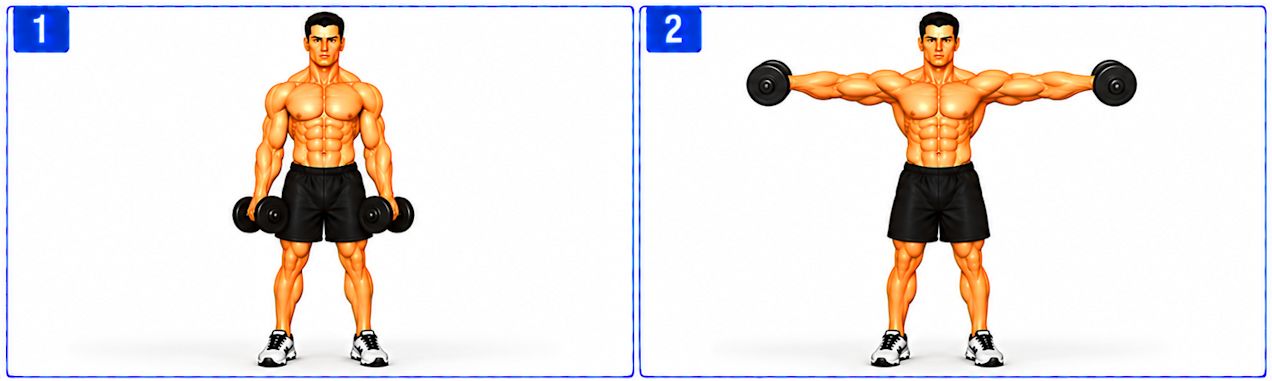
Standing Dumbbell Lateral Raises
TARGET MUSCLES:
- Middle deltoid (lateral deltoid): Primary shoulder muscle responsible for raising the upper arms outward to the sides.
- Supraspinatus: Rotator cuff muscle that assists with shoulder abduction and stabilization.
- Trapezius: Assists with shoulder blade stabilization and upward rotation as the arms are raised.
- Serratus anterior: Works with the trapezius to support controlled shoulder blade movement during arm elevation.
START POSITION:
- Stand upright with feet approximately shoulder-width apart and knees slightly bent.
- Hold a dumbbell in each hand with the arms resting at the sides and palms facing the thighs.
- Maintain a slight bend in the elbows and keep the wrists aligned with the forearms.
- Engage the abdominal muscles and maintain a neutral spine with the shoulders relaxed.
PROCEDURE:
- Exhale as you slowly raise both dumbbells outward to the sides, maintaining a slight bend in the elbows.
- Keep the wrists in a neutral position without deliberately rotating the dumbbells or turning the thumbs downward.
- Continue raising the arms until they reach approximately shoulder height, or a comfortable range of motion.
- Pause briefly at the top of the movement without shrugging the shoulders.
- Inhale as you slowly lower both dumbbells to the starting position under control.
- Repeat using slow, controlled movements.
NOTES:
- Precaution: Avoid swinging the dumbbells, leaning sideways or using momentum to lift the weights.
- Precaution: Do not force the arms above a comfortable shoulder range or deliberately turn the thumbs downward during the movement.
- Precaution: Use manageable resistance to avoid excessive shoulder strain and maintain proper technique.
- Beginner variation: Use lighter dumbbells and a smaller range of motion until shoulder strength and control improve.
- Variation: Perform alternating lateral raises, lifting one arm at a time while maintaining an upright posture.
|
|