|
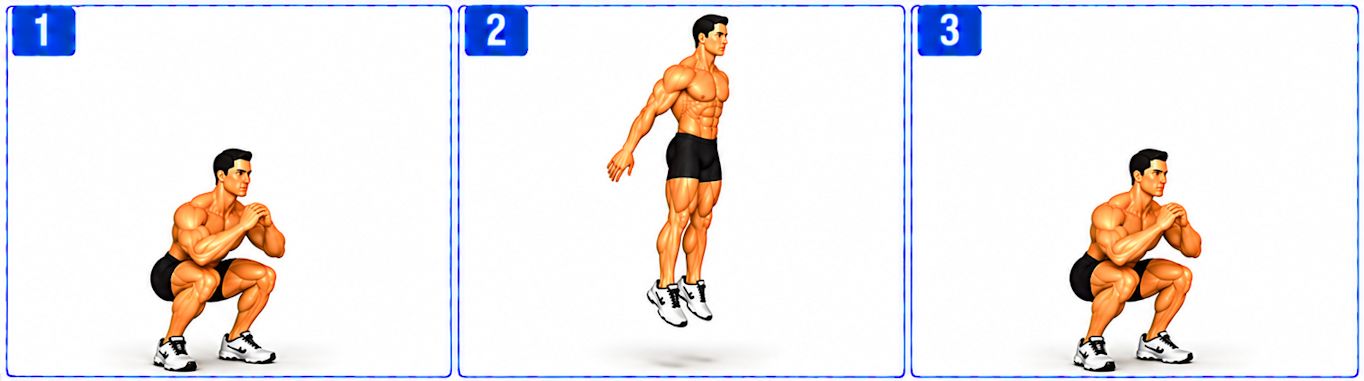
Jump squats are a plyometric lower-body exercise that combines a traditional squat with an explosive vertical jump. The exercise develops lower-body power while engaging the quadriceps, gluteals, hamstrings and calf muscles. Proper squat mechanics, controlled takeoff and soft landings are essential for effective performance.
TARGET MUSCLES:
- Quadriceps: Extend the knees during takeoff and help control knee flexion during landing.
- Gluteus maximus: Extends the hips during the upward jumping movement and helps control the descent.
- Hamstrings: Assist hip extension and contribute to knee stabilization throughout the movement.
- Calves (gastrocnemius and soleus): Assist ankle plantar flexion during takeoff and help absorb landing forces.
- Gluteus medius and minimus: Help stabilize the hips and maintain proper lower-body alignment.
- Abdominal and core muscles: Stabilize the trunk during squatting, jumping and landing.
START POSITION:
- Stand upright with the feet approximately shoulder-width apart and the toes pointing forward or slightly outward.
- Keep the head up, chest lifted and abdominal muscles engaged.
- Position the arms comfortably at the sides or slightly forward to assist with balance.
- Distribute body weight evenly across both feet and prepare to lower into a squat.
PROCEDURE:
- Bend the hips and knees to lower the body into a comfortable squat position.
- Keep the knees aligned with the toes and maintain a neutral spine throughout the squat.
- Push forcefully through both legs to extend the hips, knees and ankles, jumping vertically off the floor.
- Allow the arms to swing naturally to assist with upward momentum and balance.
- Land softly on both feet, bending the hips, knees and ankles to absorb the impact.
- Maintain knee alignment and an upright, controlled torso during landing.
- Return to the squat position and repeat using controlled movements.
NOTES:
- Precaution: Jump squats are a high-impact exercise and may not be appropriate for individuals with certain knee, ankle, hip or balance limitations.
- Precaution: Avoid landing with stiff knees or allowing the knees to collapse inward.
- Precaution: Use a stable, nonslip exercise surface and stop if pain or loss of balance occurs.
- Beginner variation: Perform traditional bodyweight squats without jumping to develop strength and proper movement mechanics.
- Advanced variation: Increase jump height or perform controlled repetitions in short intervals while maintaining proper landing technique.
|