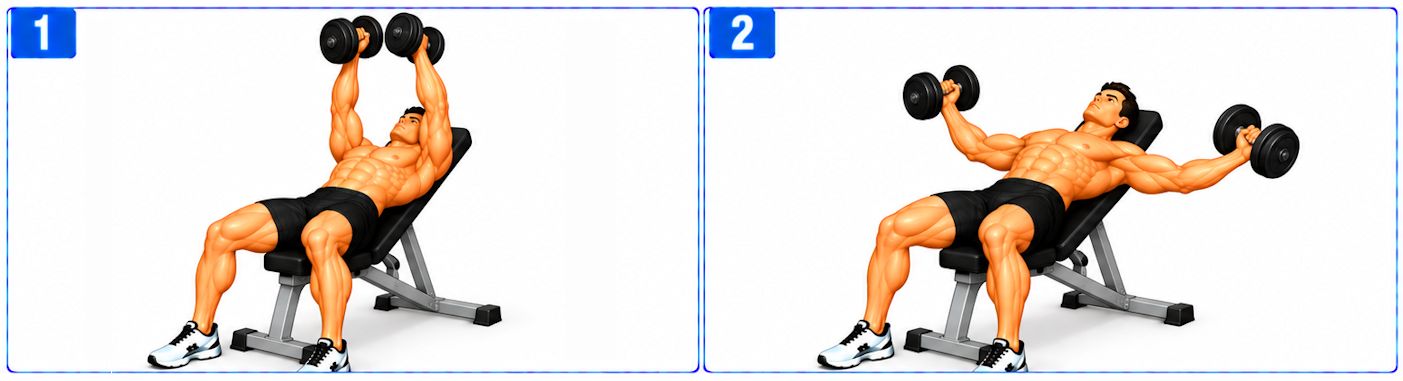
Incline Dumbbell Flye
TARGET MUSCLES:
- Pectoralis major (clavicular portion): Upper chest fibers emphasized during the incline dumbbell flye, helping bring the upper arms inward toward the body's midline.
- Pectoralis major (sternocostal portion): Assists with bringing the upper arms together during the movement.
- Anterior deltoid: Front shoulder muscle that assists with arm movement and shoulder stabilization.
START POSITION:
- Adjust the bench to a moderate incline, approximately 15 to 30 degrees.
- Lie back against the inclined bench with the head, upper back and buttocks supported and both feet firmly on the floor.
- Hold a dumbbell in each hand with the arms extended above the upper chest and palms facing each other.
- Maintain a slight bend in the elbows and keep the wrists aligned with the forearms.
- Gently draw the shoulder blades back and down while maintaining a natural spinal position.
PROCEDURE:
- Inhale as you slowly lower both dumbbells outward to the sides in a wide, controlled arc.
- Maintain approximately the same slight bend in the elbows throughout the movement, keeping the palms facing each other.
- Lower the dumbbells only as far as the shoulders can comfortably move without excessive stretching or discomfort.
- Exhale as you contract the chest muscles to bring the dumbbells back upward along the same arc until the arms are positioned above the upper chest.
- Repeat using slow, controlled movements.
NOTES:
- Precaution: Avoid lowering the dumbbells excessively or forcing the shoulders into an uncomfortable stretch.
- Precaution: Do not use excessively heavy dumbbells, straighten the elbows forcefully or allow the weights to drop rapidly.
- Precaution: Avoid bringing the dumbbells together forcefully at the top of the movement.
- Beginner variation: Use light dumbbells and a reduced range of motion while developing shoulder stability and control.
|
|