|
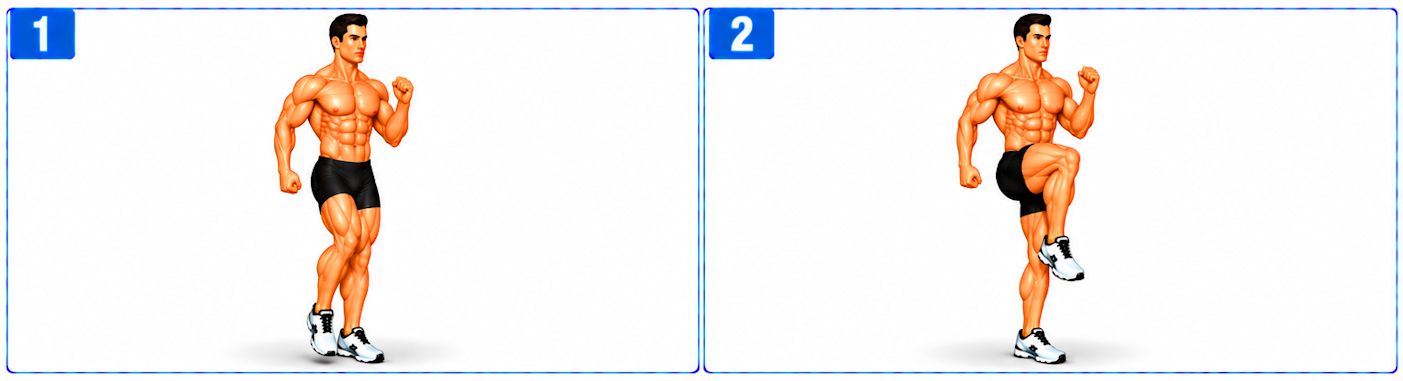
High knees are a dynamic cardiovascular exercise that combines alternating knee lifts with coordinated arm movements. The exercise engages the hip flexors, leg muscles and core while increasing heart rate and improving coordination. High knees can be performed at different speeds to accommodate various fitness levels and training goals.
TARGET MUSCLES:
- Hip flexors (iliopsoas and rectus femoris): Lift the thighs upward toward the torso during each knee drive.
- Quadriceps: Assist with knee extension and support the legs during the alternating running motion.
- Gluteals: Help stabilize the pelvis and extend the supporting hip during the movement.
- Hamstrings: Assist with knee flexion and help coordinate the alternating leg movements.
- Calves (gastrocnemius and soleus): Assist with push-off and controlled landing.
- Abdominal muscles: Stabilize the trunk and pelvis while the legs and arms move.
START POSITION:
- Stand upright with the feet approximately hip-width apart and the knees slightly relaxed.
- Keep the head up, shoulders relaxed and abdominal muscles engaged.
- Bend the elbows approximately 90 degrees with the arms positioned naturally at the sides.
- Maintain an upright posture and prepare to alternate the knees and arms in a running motion.
PROCEDURE:
- Raise one knee toward hip height while driving the opposite arm forward in a coordinated running motion.
- Lower the raised foot toward the floor under control while preparing to lift the opposite knee.
- Alternate the knees continuously, coordinating each knee lift with the opposite arm movement.
- Maintain an upright torso, engage the abdominal muscles and avoid leaning excessively backward.
- Land lightly with the knees slightly relaxed and maintain a comfortable, controlled rhythm.
- Gradually increase the pace as coordination and cardiovascular fitness improve.
NOTES:
- Precaution: Avoid forcefully striking the floor or using excessive speed that compromises balance or posture.
- Precaution: Raise the knees only as high as comfortably possible without leaning backward or straining the hips or lower back.
- Precaution: Use a stable, nonslip exercise surface and supportive footwear appropriate for the activity.
- Beginner variation: Perform marching high knees without jumping, lifting one knee at a time at a slower pace.
- Advanced variation: Increase the pace or perform short timed intervals while maintaining controlled landings and coordinated arm movement.
|