|
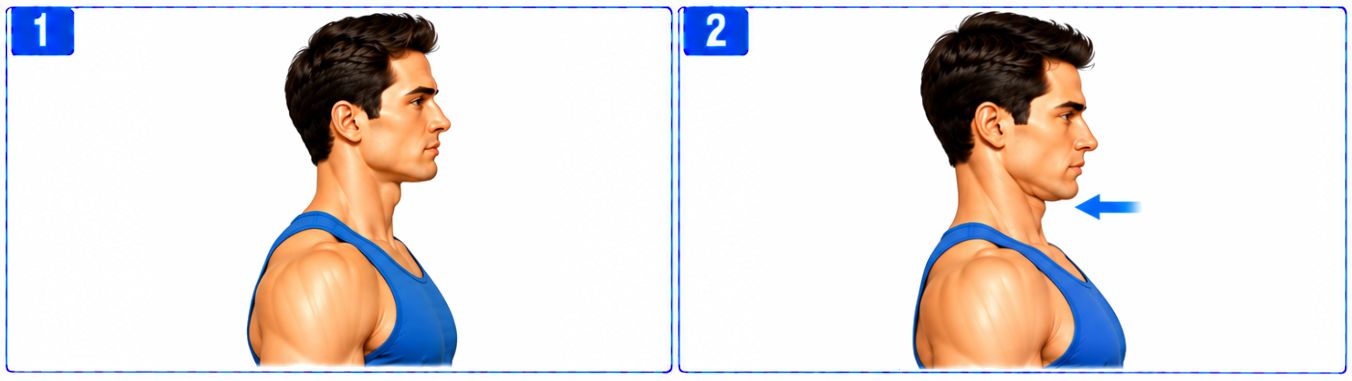
The chin tuck is a gentle neck exercise that encourages cervical retraction and improves awareness of head and neck alignment. By drawing the head backward while keeping the eyes level, the exercise activates the deep cervical flexor muscles and helps train control of the cervical spine. Chin tucks require no equipment and can be performed while sitting or standing.
TARGET MUSCLES:
- Longus colli: Deep cervical flexor muscle that contributes to cervical stabilization and controlled neck positioning.
- Longus capitis: Deep neck flexor that assists with head and cervical spine control.
- Deep cervical stabilizers: Assist with maintaining controlled alignment of the head and neck during cervical retraction.
START POSITION:
- Sit or stand upright with the spine in a comfortable neutral position.
- Keep the shoulders relaxed and the head centered over the torso.
- Look straight ahead with the chin level and the eyes facing forward.
- Allow the arms to rest comfortably at the sides or in the lap.
PROCEDURE:
- Gently draw the head straight backward, as though making a double chin.
- Keep the eyes level and avoid tilting the head upward or downward.
- Maintain relaxed shoulders and avoid excessive tension in the jaw or neck.
- Hold the retracted position gently for approximately 3 to 5 seconds while breathing normally.
- Slowly release the contraction and return the head to the starting position.
- Repeat using slow, controlled movements within a comfortable range of motion.
NOTES:
- Precaution: Avoid forcing the head backward or pushing the chin downward toward the chest.
- Precaution: Stop if the exercise produces pain, dizziness, headache, tingling, numbness or other unusual symptoms.
- Precaution: Individuals with recent neck injuries, cervical instability or significant cervical spine disorders should seek medical guidance before performing this exercise.
- Beginner variation: Perform the movement while seated with the back supported, using a very small and comfortable range of motion.
- Advanced variation: Gradually increase the holding duration while maintaining gentle effort and proper head alignment.
|