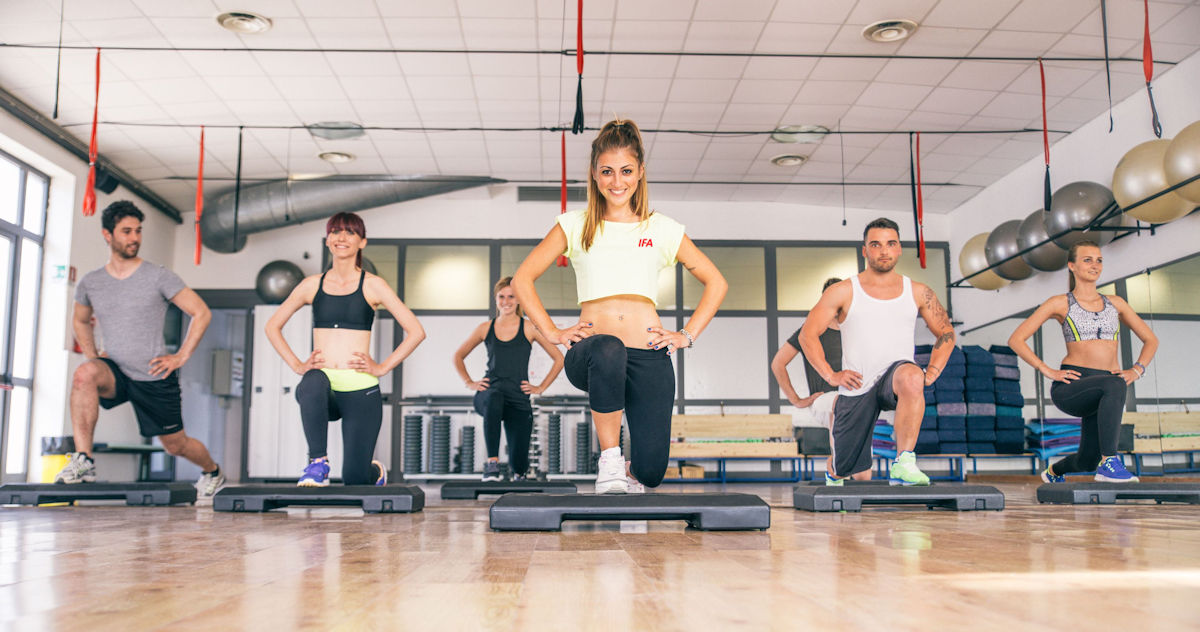
Step Aerobics Basics
|
Step aerobics combines rhythmic stepping movements with aerobic exercise to improve cardiovascular fitness, coordination and muscular endurance. The following guidelines emphasize proper technique, safe platform use and modifications that accommodate different fitness levels and abilities.
|
The Basics
- Use a stable, nonslip step platform on a level surface. Make sure the platform is secure before beginning.
- Select a platform height appropriate for your fitness level, balance, coordination and experience. Beginners may benefit from a lower platform.
- Maintain an upright, comfortable posture. Avoid excessive arching or rounding of the back during stepping movements.
- Engage the abdominal muscles as needed to support balance and posture. Continue breathing naturally throughout the exercise.
- Keep the knees generally aligned with the direction of the toes during stepping, landing and turning movements.
- Allow the knees and hips to bend naturally to absorb impact. Avoid stiff-legged or uncontrolled landings.
- While it’s natural for your knees to track slightly past your toes during a step, avoid letting them drift excessively forward.
- Place the entire foot securely on the platform when stepping up. Avoid allowing the heels or toes to hang over the edges.
- Step down with control and maintain awareness of the landing area. Avoid stepping blindly or jumping off the platform.
- When crossing or turning around the platform, allow enough space to complete the movement without twisting the knees excessively.
- Perform kicks and leg lifts within a comfortable range of motion. Avoid using excessive height or momentum.
- Choose a music tempo that allows participants to maintain proper form and complete each movement safely. More complex choreography may require a slower tempo.
- Increase the complexity, speed and intensity of movements gradually as coordination and conditioning improve.
- High-impact movements, including jumping jacks and hops, require additional balance and control. Avoid jumping onto or off a platform unless the movement, equipment and participant ability permit safe execution.
- Provide lower-impact alternatives such as marching, side steps and controlled step-outs for participants who prefer not to jump.
- Vary repetitive movements as needed to maintain good technique and avoid excessive fatigue. There is no universal time limit appropriate for every participant.
- Wear supportive athletic footwear appropriate for aerobic exercise and keep the surrounding exercise area clear of obstacles.
- Begin with a warm-up and progress gradually to more demanding movements. Include a cool-down as appropriate for the session.
- Reduce the intensity or stop the movement if pain, dizziness, unusual shortness of breath or loss of balance occurs.
New to step aerobics? Begin with the Basic Step to learn fundamental stepping technique before progressing to more complex combinations.
|