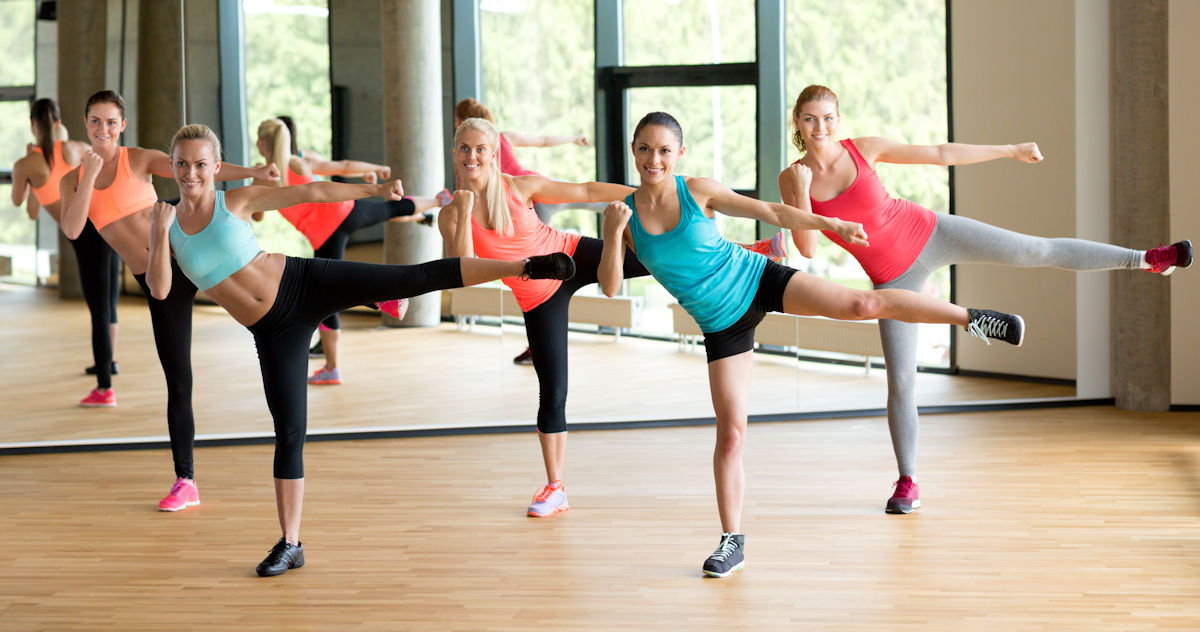
Starting Positions
The Stances
- Basic Stance: Stand with the feet approximately shoulder-width apart, knees relaxed and hands raised in a comfortable guard position.
- Boxer's Dance: Shift body weight lightly from one foot to the other while maintaining balance and keeping the hands in guard position. Use small, controlled movements.
- Shuffle: Move forward or backward using short steps without crossing the feet. A routine may include four movements forward followed by four movements backward.
- Bounce: Perform small, controlled bounces using the ankles, knees and hips to absorb impact. A low-impact alternative is to shift weight between the feet without leaving the floor.
- Switch Stance: Change which foot is forward by stepping the feet into the opposite fighting stance. More advanced participants may use a small hop if balance and technique permit.
- Torso Twist: Rotate the torso gently from side to side while maintaining balance. Allow the hips and feet to move naturally when a larger rotation is required.
Defense Position
- Raise both hands in front of the face, with the fists near the chin and the elbows comfortably bent.
- Keep the elbows relatively close to the body without pressing the arms tightly against the chest.
- Relax the shoulders and maintain a comfortable position for the wrists.
- Keep the chin slightly lowered and the eyes directed forward.
- Return the hands to this guard position after each punch or combination.
Front Fighting Stance
- Stand facing forward with the feet approximately shoulder-width apart.
- Keep the knees slightly bent and distribute body weight comfortably between both feet.
- Position the toes generally forward, allowing a slight outward angle when comfortable.
- Raise the hands into the Defense Position.
- Maintain an upright posture with the abdominal muscles gently engaged.
- Avoid leaning excessively forward or backward.
- This stance may be used when practicing basic punches, blocks and other cardio kickboxing movements.
Right and Left Hand Fighting Stance
- Begin with the feet approximately shoulder-width apart, then place one foot forward and the other behind in a comfortable staggered stance.
- Keep the feet separated sideways as well as front to back to provide a stable base.
- Point the lead foot generally forward and allow the rear foot to turn outward slightly.
- Keep the knees relaxed and distribute body weight comfortably between both legs.
- Raise the hands into the Defense Position, with the lead hand slightly forward.
- Orthodox Stance: The left foot and left hand lead, with the right foot and right hand positioned behind.
- Southpaw Stance: The right foot and right hand lead, with the left foot and left hand positioned behind.
- Either stance may be practiced during cardio kickboxing to develop coordination on both sides of the body.
- Maintain a comfortable posture and avoid twisting the knees when changing direction.
Basic Technique:
Forward Jab
- Begin in a comfortable fighting stance with both hands raised in the Defense Position.
- Extend the lead hand forward in a straight punching motion.
- Keep the wrist aligned with the forearm and avoid bending the wrist during the punch.
- Allow the shoulder to move naturally without excessive shrugging.
- Rotate the fist naturally as the arm extends, if comfortable.
- Maintain balance and avoid forcefully locking the elbow at full extension.
- For cardio kickboxing without a target, stop the punch under muscular control rather than snapping the arm.
- Return the hand promptly to the Defense Position.
Hook Punch
- Begin in a fighting stance with the hands raised in the Defense Position.
- Bend the punching arm and move the fist through a controlled horizontal arc.
- Keep the wrist aligned with the forearm and maintain a comfortable bend in the elbow.
- Rotate the torso and hips slightly toward the direction of the punch.
- Allow the feet to pivot naturally when needed to prevent twisting the knees.
- Keep the punch within a comfortable range rather than swinging the arm excessively wide.
- Maintain balance and avoid forceful elbow extension.
- Return the hand to the Defense Position.
Power Punch
- Begin in a staggered fighting stance with the hands raised in the Defense Position.
- Execute a straight punch using the rear hand.
- Rotate the rear hip and torso forward as the punching arm extends.
- Allow the rear foot to pivot naturally with the rotation to avoid twisting the knee.
- Keep the wrist aligned with the forearm and the shoulders relaxed.
- Maintain a stable stance without leaning excessively forward.
- Avoid forcefully locking the elbow or snapping the punch.
- Return the punching hand to the Defense Position.
Cross Jab
- Begin in a fighting stance with one foot forward and the opposite foot behind.
- Extend the rear hand forward in a straight punch across the front of the body.
- Rotate the hips and torso toward the punch while maintaining a stable posture.
- Allow the rear foot to pivot as necessary so that the knee moves naturally with the hip.
- Keep the wrist aligned with the forearm and avoid forceful elbow extension.
- Keep the opposite hand near the face in the Defense Position.
- Return the punching hand to guard and regain the starting stance.
- This movement is commonly called a Cross or Rear-Hand Cross in boxing terminology.
Uppercut Punch
- Begin in a fighting stance with both hands raised in the Defense Position.
- Bend the punching arm and lower the fist slightly while keeping it close to the body.
- Drive the fist upward through a short, controlled arc in front of the torso.
- Allow a small rotation of the hips and torso to accompany the movement.
- Keep the wrist aligned with the forearm and avoid excessive shoulder movement.
- Do not swing the arm upward beyond a comfortable range.
- Maintain balance and return the hand to the Defense Position.
Shin Block
- Begin in a balanced fighting stance with the hands raised in the Defense Position.
- Transfer body weight onto the supporting leg.
- Raise the opposite knee while keeping the lower leg relaxed and the knee comfortably bent.
- The raised shin may be angled slightly outward to simulate a defensive blocking position.
- Keep the torso upright and avoid excessive twisting or leaning.
- For cardio kickboxing, perform this as a controlled movement without receiving an actual strike.
- Lower the leg gently and return to the starting stance.
Knee Strike
- Begin in a stable fighting stance with the hands raised in the Defense Position.
- Transfer body weight onto the supporting leg.
- Raise the opposite knee upward in front of the body through a comfortable range of motion.
- Allow the torso and arms to move naturally with the knee lift while maintaining balance.
- An optional arm movement is to draw both hands downward toward the rising knee, simulating a controlled knee strike.
- Avoid forcefully pulling the upper body downward or rounding the back excessively.
- Lower the leg with control and return to the starting position.
Duck and Jab (Bob and Weave)
- The Bob and Weave is a defensive boxing movement involving a controlled lowering and shifting of the body.
- The movement is different from a simple Duck and Jab combination.
- For introductory cardio kickboxing classes, a Tap and Jab may be used as a simpler alternative.
- To perform a Tap and Jab, step or tap one foot to the side while extending the opposite arm in a controlled jab.
- Return to the starting position and repeat on the opposite side.
- A shallow bob-and-weave movement may be appropriate for participants who can maintain proper balance and knee alignment.
- Avoid deep or rapid movements that cause discomfort or require twisting a planted knee.
- Keep the movement controlled and within a comfortable range of motion.
Front High Block
- Begin in a balanced stance with the hands raised in the Defense Position.
- Raise one forearm above the head with the elbow comfortably bent.
- Position the forearm at an angle that would direct an incoming movement away from the head.
- Keep the shoulder relaxed and avoid forcing the arm beyond a comfortable range.
- Maintain a stable posture without leaning excessively backward.
- For cardio kickboxing, practice the blocking motion without physical contact.
- Return the arm to the Defense Position and repeat on the opposite side.
Outside Middle Block
- Begin with the hands raised in the Defense Position.
- Bend the blocking arm comfortably at the elbow.
- Move the forearm outward from the center of the body toward the side.
- Keep the shoulder relaxed and avoid swinging the arm excessively far behind the body.
- Allow the forearm to rotate naturally through a comfortable range of motion.
- Maintain balance and avoid unnecessary torso twisting.
- Return the arm to the Defense Position.
Inside Middle Block
- Begin with the hands raised in the Defense Position.
- Position the blocking arm slightly toward the outside of the body with the elbow comfortably bent.
- Move the forearm inward toward the centerline of the body.
- Allow the forearm to rotate naturally so that the hand finishes in a comfortable position.
- Keep the shoulder relaxed and avoid excessive arm movement.
- Maintain balance and return the arm to the Defense Position.
Front Kick from Rear Leg or Front Leg
- Begin in a balanced fighting stance with the hands raised in the Defense Position.
- Transfer body weight onto the supporting leg.
- Raise the kicking knee in front of the body before extending the lower leg.
- Extend the leg forward through a comfortable range of motion without snapping or hyperextending the knee.
- Keep the torso upright and maintain control of the supporting leg.
- In martial arts, a front kick may use the ball of the foot as a contact surface. In cardio kickboxing, the movement is generally performed without contact.
- Bend the kicking knee again before lowering the foot.
- Return the foot to the starting stance with control.
- Repeat using either the front or rear leg.
Push Kick from Rear Leg or Front Leg
- Begin in a balanced fighting stance with the hands raised in the Defense Position.
- Transfer body weight onto the supporting leg.
- Raise the kicking knee in front of the body.
- Flex the kicking foot and extend the leg forward in a controlled pushing motion.
- The heel may be directed forward to simulate the pushing action used in martial arts.
- Avoid snapping or hyperextending the knee.
- Maintain an upright posture without leaning excessively backward.
- Retract the kicking leg by bending the knee, then lower the foot with control.
- The movement may be performed with either the front or rear leg.
Roundhouse Kick
- The Roundhouse Kick is a rotational martial arts technique that requires coordination of the supporting foot, hips and kicking leg.
- Begin in a staggered fighting stance with the hands raised in the Defense Position.
- Transfer body weight onto the supporting leg.
- Pivot the supporting foot as the hips and torso turn toward the direction of the kick.
- Raise the kicking knee and guide the lower leg through a controlled circular motion.
- Keep the kicking height comfortable and avoid snapping the knee into full extension.
- Allow the supporting foot to turn with the body rather than twisting a planted knee.
- Retract the kicking leg and return to a stable stance.
- For introductory cardio kickboxing classes, use a low, controlled turning kick as an alternative to a full roundhouse kick.
- Advanced kicking techniques should be taught only when participants have developed adequate balance, coordination and control.
Turning Kick
- The Turning Kick is presented here as a simplified, controlled rotational kick for cardio kickboxing classes.
- Begin in a staggered fighting stance with the hands raised in the Defense Position.
- Transfer body weight onto the supporting leg.
- Raise the kicking knee toward the intended direction of movement.
- Allow the hips and supporting foot to turn slightly as the kicking leg extends.
- Keep the kick at a comfortable height and avoid snapping or hyperextending the knee.
- Maintain balance and avoid twisting the supporting knee.
- Retract the kicking leg and return to the starting stance with control.
- This variation emphasizes coordination and safe movement rather than striking power.
|